Snipers Duel
- 4.5
- Rating
- 1.00M
- Installs
- Free
- Price

 Analysis by App-foxy
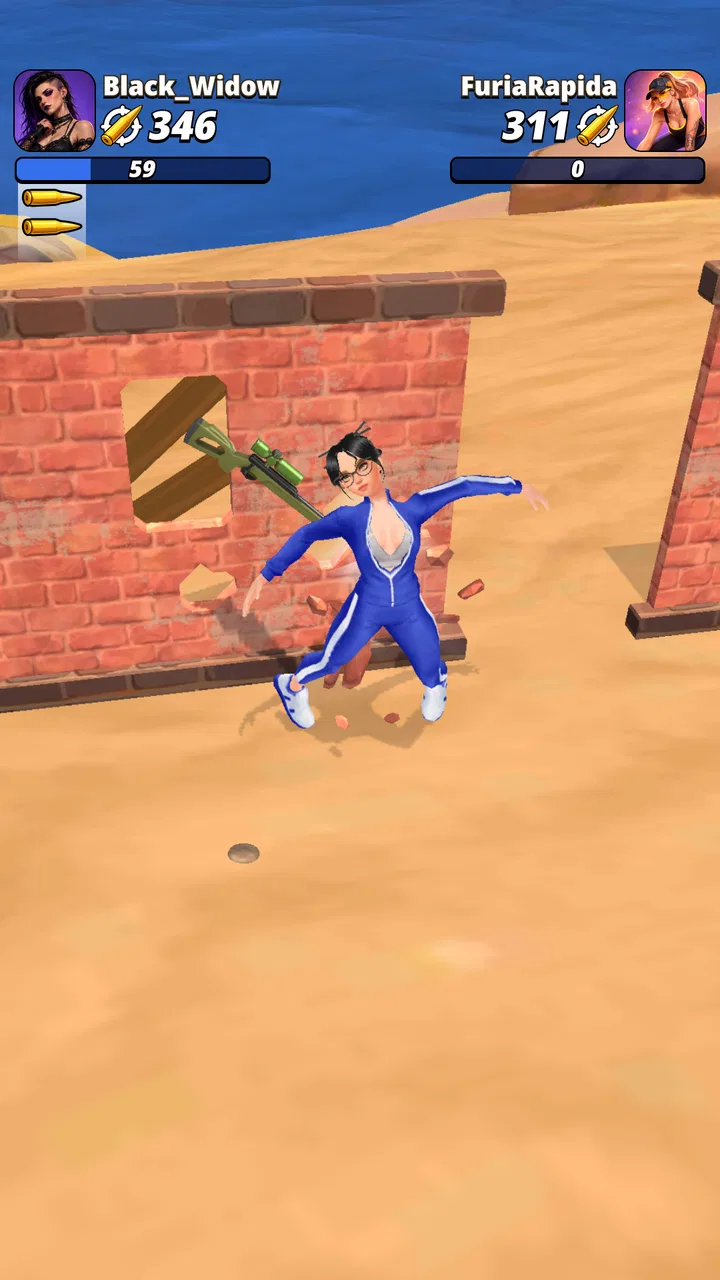
I went into Snipers Duel expecting a quick mobile shooting game, and that is exactly where it makes the best impression: short tactical encounters that ask me to read the situation, choose a weapon, and decide when taking a shot is actually worth exposing myself. It is a free simulation game from VOODOO, but it feels more deliberate than a simple reflex test because cover, timing, and positioning all matter during a duel.
The basic idea is easy to understand. Two snipers face each other, and the useful question is not simply who can aim faster. I have to look for a safe angle, work around cover, and avoid wasting an opportunity on a rushed shot. That creates a compact loop that works well when I have only a few minutes, while still leaving room to improve through repetition.
After spending time with it, I see the game as a good fit for players who enjoy focused one-on-one challenges rather than long campaigns or complicated management systems. It is also a reasonable choice if you like simulation games with a competitive edge but do not want a large download full of menus and side activities. The experience is more about making a series of small decisions correctly than building a huge collection or following a story.
You May Also Like

 Blood Strike: 2.5 Anniversary
Blood Strike’s Loadouts Turn Every Drop Into a Tactical Gamble
A close look at Blood Strike’s custom loadouts: how fast access to signature weapons reshapes its battle royale rhythm, rewards preparation, and narrows the gap between fights.

 Pandora - Music & Podcasts
Pandora’s Music Is Easy to Start, but Harder to Recover
Pandora’s strength is its low-effort path from a seed to a station. Its weak spot is how much confidence it asks you to place in connection, setup, and quiet recovery.

 8 Ball Pool
 Is Built on Rivalries, Rematches, and Routine
A close look at the rivalries, rematches, shared routines, and unanswered safety questions that turn a quick pool match into a persistent mobile community.

 Samsung Music
’s Quiet Strength Is Playing What You Already Own
Its reach comes less from spectacle than from dependable access to a personal library. That simplicity is both the app’s strongest retention engine and its ceiling.

 AccuWeather: Weather Radar
AccuWeather Review: A Quick, Clear Forecast for Everyday Decisions
For everyday plans, the best forecast is the one you can understand quickly. AccuWeather makes rain timing, radar, and local conditions easy to act on, with a few trade-offs.

 Hill Climb Racing
Why Hill Climb Racing Still Turns Crashes Into One More Run
A tiny car, a bumpy hill and one more upgrade: Hill Climb Racing keeps resurfacing because its simple chaos makes every near-miss feel personal.
More From Our News Desk



How I play each duel and build a reliable routine
I treat each duel as a small decision-making exercise rather than a race to shoot. This section looks at how I turn observation, weapon choice, and cover into a repeatable routine, including a simple way to learn from a loss without changing everything at once. Once that routine feels steady, it becomes easier to judge whether the game’s presentation and navigation support the way I play.
Starting with observation instead of rushing
My most useful change was to stop treating the opening moment as a race to fire. The first few seconds are better used to understand the layout and identify what parts of the environment can protect me. Since the game centers on sniper duels, a clear line of sight is valuable, but an obvious line of sight can also make my own position predictable.
I now begin each round by checking the available cover and considering where the rival is likely to expect a shot. That simple pause improves my decisions more than trying to swipe or tap faster. When I fire immediately and miss, I often give away the advantage I had at the start. Waiting briefly can feel passive, but it gives me more information and makes the next move intentional.
This is one of the reasons the game works better for me as a tactical simulation than as an ordinary arcade shooter. The controls may be accessible, yet the best results come from controlling impatience. A player who enjoys planning a move and then seeing whether it works will probably get more from it than someone looking for constant action.
Choosing a weapon for the situation
The weapon choice deserves more thought than simply selecting whichever option looks strongest. In a duel, the right choice depends on the cover, the angle, and how confidently I can create a clean opportunity. A weapon that seems powerful can be a poor match if it encourages me to take shots that are difficult to line up.
I try to connect the weapon decision to a specific plan. If I expect to wait for a narrow opening, I want a choice that supports patience and accuracy. If the environment gives me a more direct route, I consider whether a faster, less complicated approach is safer. This habit prevents the selection screen from becoming a routine tap before the real game begins.
There is also a useful trade-off here for newer players. Experimenting with different weapons helps reveal how each one changes the rhythm of a round, but switching constantly can make it hard to learn what actually caused a win or loss. I recommend using one familiar choice for several duels, then changing it when the environment or your own weakness gives you a clear reason.
Using cover as part of the attack
Cover is not merely a place to hide until the opponent makes a mistake. I found it more effective to treat cover as part of my attack plan. It can let me reset the situation, break an expected angle, or create a safer moment for a shot. Staying behind protection forever, however, usually leaves me reacting instead of controlling the duel.
A practical routine is to identify a protected position, look for the smallest useful opening, and then return to safety rather than lingering in view. The important detail is not to expose more of the position than necessary. This makes each attempt feel purposeful and also reduces the temptation to keep adjusting after I already have a workable angle.
When I lose, I ask whether the problem was aim, timing, or exposure. That question is more helpful than blaming the weapon immediately. If the shot was accurate but my position remained visible too long, changing weapons will not solve the real issue. This kind of self-review is where the game gains depth beyond its short rounds.
Settings I check before settling into play
The settings are worth opening before I decide whether the controls feel comfortable. On a phone, small differences in touch response or visual clarity can affect a precision-focused game more than they would affect a casual puzzle. I check the available control and display options, then play a few rounds rather than judging them from the menu alone.
I prefer a setup that lets me make one deliberate movement without accidentally overcorrecting. If aiming feels too sensitive, I slow down my gestures and make smaller adjustments before assuming the game is inaccurate. If the screen feels visually busy, I look for a clearer way to read the cover and the target area through the options that are actually available on my device.
These checks are not magic improvements, and I would not expect settings to compensate for poor positioning. Their value is consistency. Once the controls feel predictable, I can tell whether a miss came from my decision or from a movement that did not behave as expected. That distinction matters when trying to improve.
Players who share a device should also take a moment to restore their preferred setup before a serious session. A control arrangement that feels fine to someone else may encourage larger movements or slower reactions for me. Since each duel is compact, even a small adjustment can change how confidently I handle a narrow opening.
A faster pattern for repeat play
After learning the basic rhythm, I use a repeatable three-step pattern: scan, choose, commit. First I scan the cover and likely sightlines. Then I choose a weapon and a general route based on that information. Finally, I commit to one action instead of endlessly searching for a perfect angle.
The final step is important because overthinking can be just as damaging as rushing. A good opportunity may not remain available forever, and constant repositioning can make me lose track of what the rival can see. I would rather take a reasonable shot from a controlled position than spend the entire duel trying to create an impossible one.
Another useful habit is separating learning rounds from winning rounds. In a learning round, I deliberately test a different weapon or approach and accept that the result may be worse. In a winning round, I return to the pattern I understand and focus on execution. Mixing those goals without noticing can make the game feel inconsistent when the real problem is that I am changing too many variables at once.
This approach is especially useful during a short everyday break. If I have a few spare minutes while waiting for an appointment, I can play a handful of duels without needing to remember a complicated campaign. I use the first round to settle into the controls, the next one to test a decision, and the final one to apply what I learned. That gives the session a purpose instead of turning it into random retries.
What experienced play can and cannot solve
Practice helps with reading cover, controlling movement, and recognizing when a shot is too risky. It does not remove the basic limitations of a compact mobile duel. Some players will eventually want more variety, longer-term progression, or a deeper competitive structure than this format provides. For them, a larger tactical shooter or a more traditional multiplayer game may offer a stronger long-term home.
I also would not recommend it to someone who dislikes repeated one-on-one encounters. The appeal comes from refining a small set of decisions, so players who need a broad story, many character roles, or constant new objectives may find the loop narrow. The Teen content rating is another reason parents should check whether the tone suits the intended player rather than assuming that a simple presentation makes it suitable for everyone.
The free entry point is convenient, but the game includes in-app purchases ranging from $1.99 to $59.99 per item. That matters when deciding how casually to approach it. I would begin without spending anything and first determine whether the core duel loop is enjoyable on its own. Anyone sensitive to optional purchases should keep that range in mind before making the game part of a regular routine.
How it compares with familiar alternatives
Compared with a conventional action shooter, this game is less about moving through large spaces and more about solving a single confrontation. That makes it easier to pick up, but it also means there is less room for players who enjoy map exploration, team roles, or extended firefights. The focused design is a strength when I want a quick mental challenge and a weakness when I want a full evening of variety.
Against slower simulation games, it has a more immediate payoff. I do not need to manage a large economy or wait for long construction cycles before making a meaningful decision. On the other hand, it does not provide the same broad sense of ownership that comes from developing a city, vehicle, or long-running career. Its simulation appeal is concentrated in the judgment of each shot and the use of cover.
It also sits apart from purely casual tap games. The controls are approachable, but victory depends on habits that are easy to overlook: observing before acting, matching the weapon to the situation, and leaving cover at the right moment. That gives it more replay value than a game where every round can be solved by repeating the same quick gesture.
Who should download it and who should skip it
I would recommend this game to someone who likes short competitive encounters, tactical positioning, and learning through repetition. It suits a player who can enjoy losing a duel if the loss reveals a mistake worth correcting. The fact that it is free makes it easy to test that loop without committing to a purchase at the start.
I would skip it if I wanted a story-driven sniper campaign, a large arsenal to manage, or a clearly expansive progression system. I would also look elsewhere if I found repeated duels frustrating rather than satisfying. The game asks me to appreciate small improvements, such as holding a better angle or waiting half a second longer, and that style is not for everyone.
Device compatibility is fairly approachable: the listed minimum is Android 8.0, so owners of older supported phones may still be able to try it. The current version is 1.2.6, and I would keep the app updated through the normal store process so that my experience matches the version being maintained. I would not treat the minimum operating system as a guarantee of identical performance on every phone, since screen size and hardware can still affect comfort during aiming.
My final view after building a repeatable routine
Snipers Duel works because it keeps its central decision clear: do I take the shot now, improve my position, or wait for a safer opening? I enjoy that the answer changes with the cover and the weapon rather than being reduced to raw speed. The strongest part of the experience is not the first easy win; it is noticing why a careful win felt more controlled than a lucky one.
VOODOO has made a free simulation game that is simple to start but more demanding to master than its compact format suggests. Its average rating is 4.6 from around 1.7 thousand ratings, and it has passed 100 thousand installs, which gives it a useful audience without changing the fact that the game’s appeal is quite specific. I would recommend trying it for the duel loop itself, not because it promises to replace a full-scale shooter.
My advice is to play the first session with a clear routine: inspect the settings, learn one weapon, use cover deliberately, and review the reason behind each miss. If that process feels rewarding, the game can become a satisfying short-session challenge. If you need extensive progression or constant novelty, a larger alternative will probably serve you better. For me, it earns a place as a focused pick-up-and-play game, provided I approach it as a test of judgment rather than a race to fire first.
It is available free of charge, carries a Teen age rating, and was released on April 14, 2025. Those details are useful context, but the deciding question is simpler: do you enjoy repeating a compact tactical problem until your choices become cleaner? If the answer is yes, this sniper duel format is worth trying.
FAQs for Snipers Duel
01What is Snipers Duel about?
Snipers Duel is an action-packed multiplayer game where players engage in thrilling sniper battles against opponents worldwide. The game offers various modes, including solo duels and team battles, allowing players to showcase their precision shooting skills. With realistic graphics and a wide range of sniper rifles, it provides an immersive experience for shooter game enthusiasts.
02Is Snipers Duel free to play?
Yes, Snipers Duel is free to download and play on both Android and iOS devices. However, it does offer in-app purchases for players who wish to enhance their gaming experience. These purchases can include weapon upgrades, customizations, and additional game modes that offer more diverse gameplay options.
03What are the device requirements for Snipers Duel?
Snipers Duel requires a device running Android 6.0 or iOS 11.0 or later. It also needs a stable internet connection for online multiplayer modes. For optimal performance, it is recommended to play on devices with at least 2GB of RAM. Regular updates might be necessary to access new features and improvements.
04Does Snipers Duel require an internet connection?
Yes, Snipers Duel is primarily an online multiplayer game, meaning a stable internet connection is necessary to engage in battles against other players. Some features, like leaderboards and team matches, are only accessible online. However, there may be limited offline modes available for practice or single-player engagements.
05How does Snipers Duel ensure fair play?
Snipers Duel employs an advanced anti-cheat system to maintain a fair and competitive environment. The game regularly updates its security protocols to detect and prevent cheating or hacking attempts. Players are encouraged to report suspicious behavior directly through the app to help maintain the integrity of the game.
Pros
- Intuitive controls for easy gameplay.
- Detailed graphics enhance immersion.
- Wide range of weapons available.
- Challenging levels keep interest high.
- Multiplayer mode for competitive fun.
Cons
- In-app purchases can be costly.
- Occasional lag in multiplayer mode.
- Requires constant internet connection.
- Ads can be intrusive during play.
- Limited customization options.

Snipers Duel
Gallery